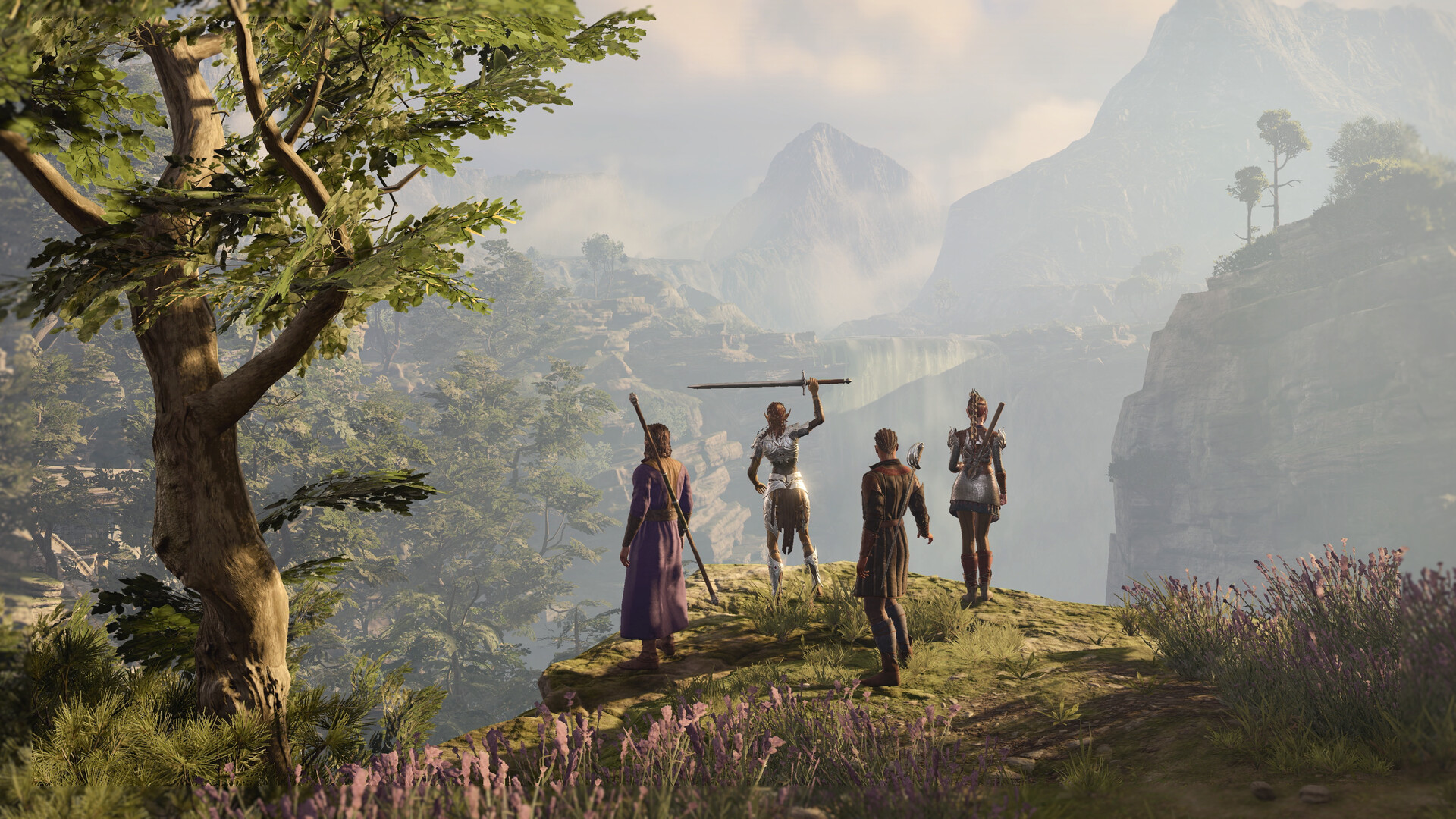
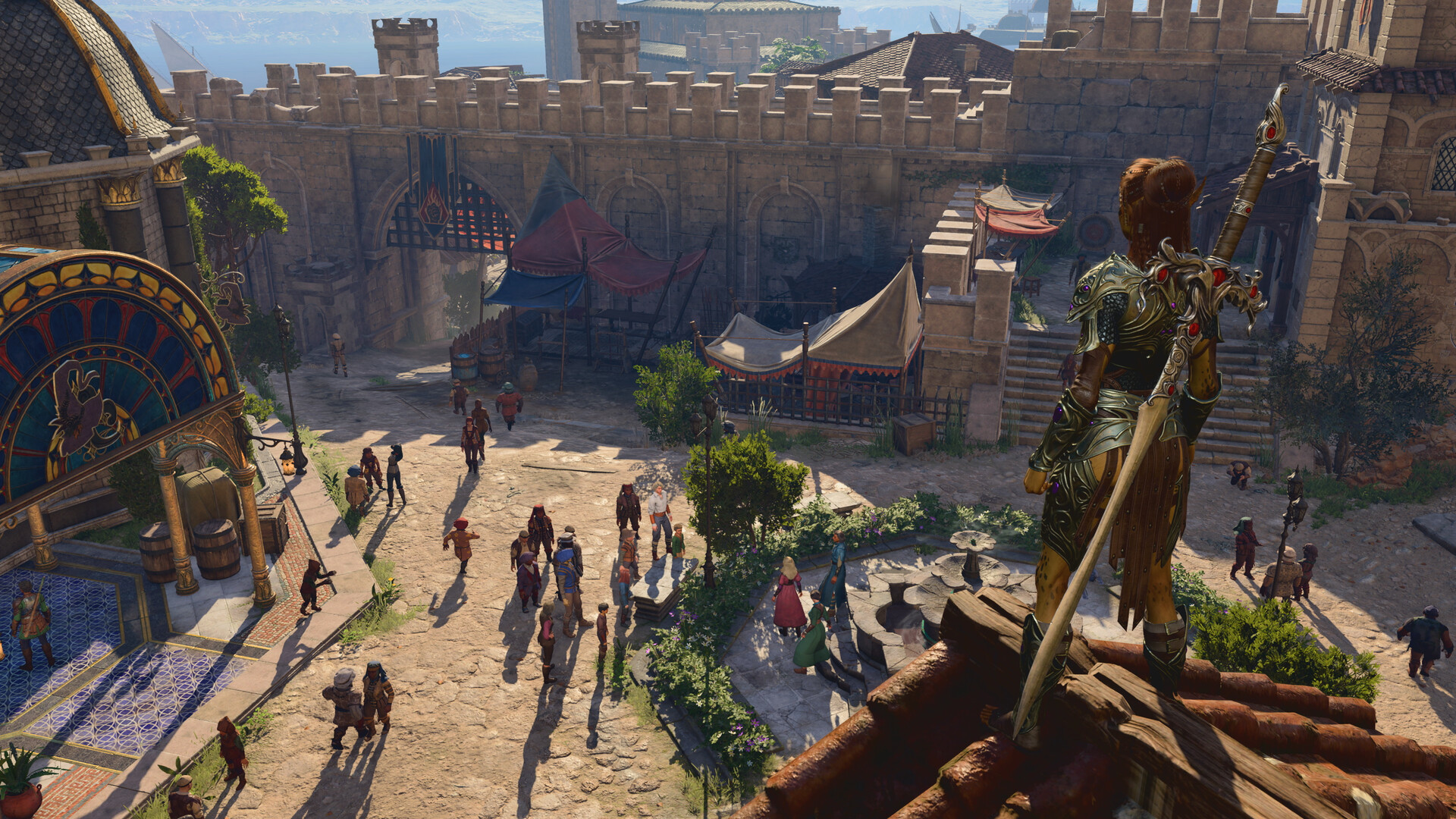
A world with scale
The valley image works because a small party sits inside a much larger landscape. In your own capture, decide whether the character or the place is the subject. Those are different intentions and may call for different framing. You do not need to identify a location or reveal a story outcome to describe the visual relationship.
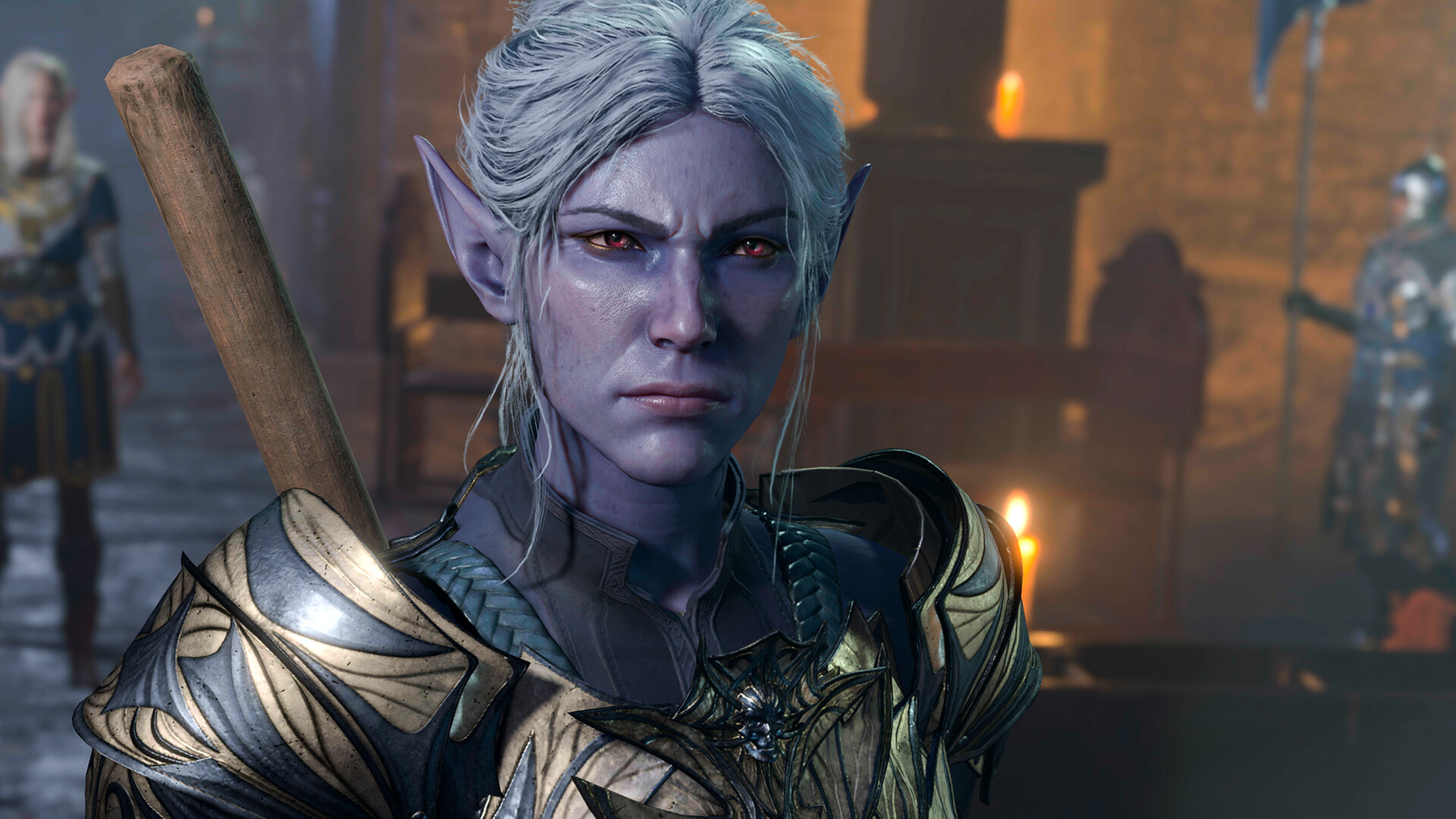
A character with a readable gesture
A portrait can be interesting because of a gaze, a hand or a silhouette rather than a large collection of effects. In the official close-ups, look at which part attracts attention first. For your own image, try to state that intention before adjusting the frame. This is visual interpretation, not a claim about the original artist’s process.
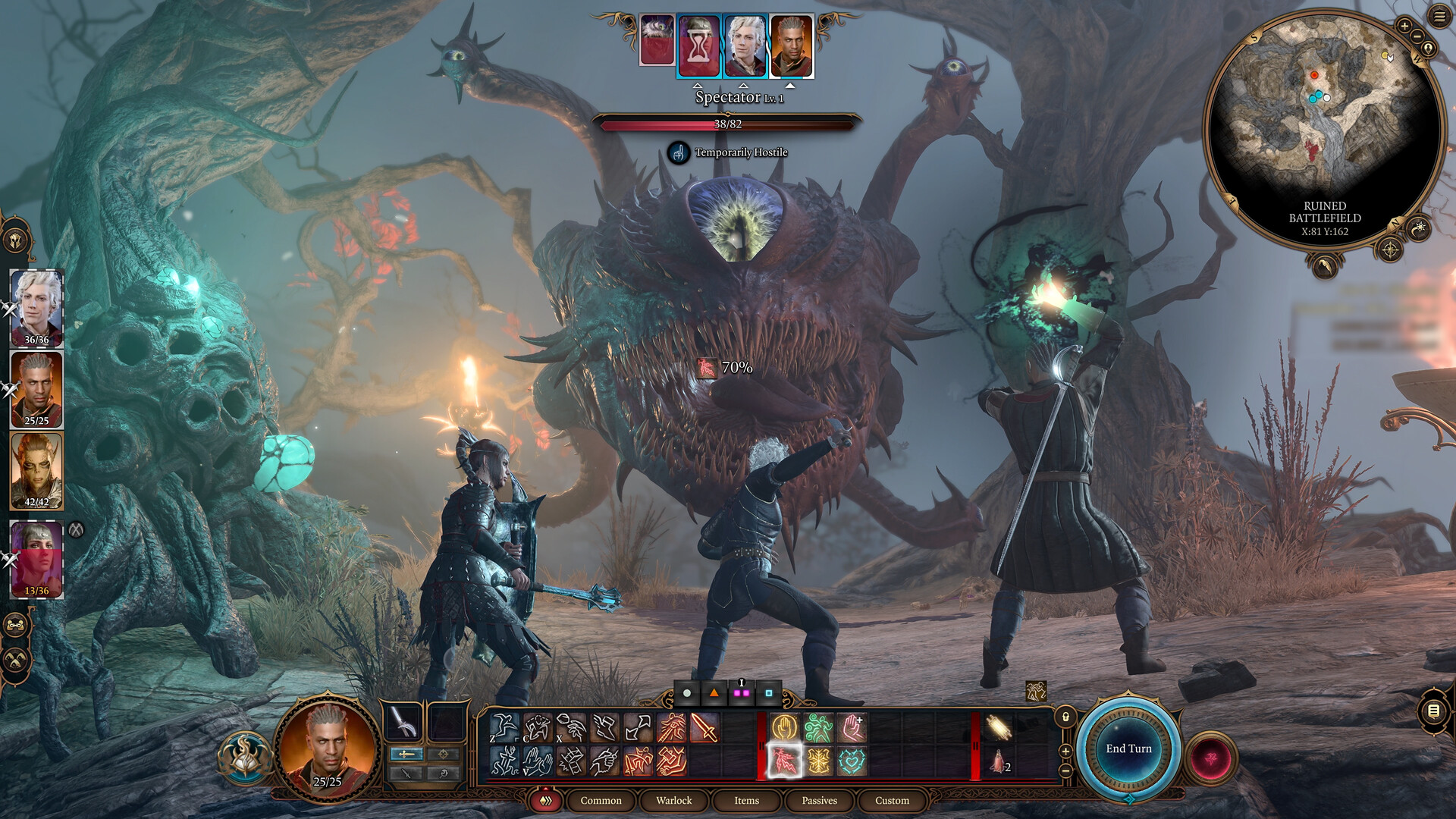
An encounter with a focal point
Action scenes can become difficult to read when every effect asks for attention. Decide what the frame should communicate: scale, tension, a gesture or a relationship. Use one untouched capture as a reference and make a deliberate variation. Our exercises do not require a particular story scene or an unofficial camera modification.
A useful before-and-after comparison
Save a reference image, make one framing change and write why it helps or hurts the intended subject. A specific observation—clearer silhouette, quieter background, stronger scale—is easier to reuse than a list of unexplained slider values.
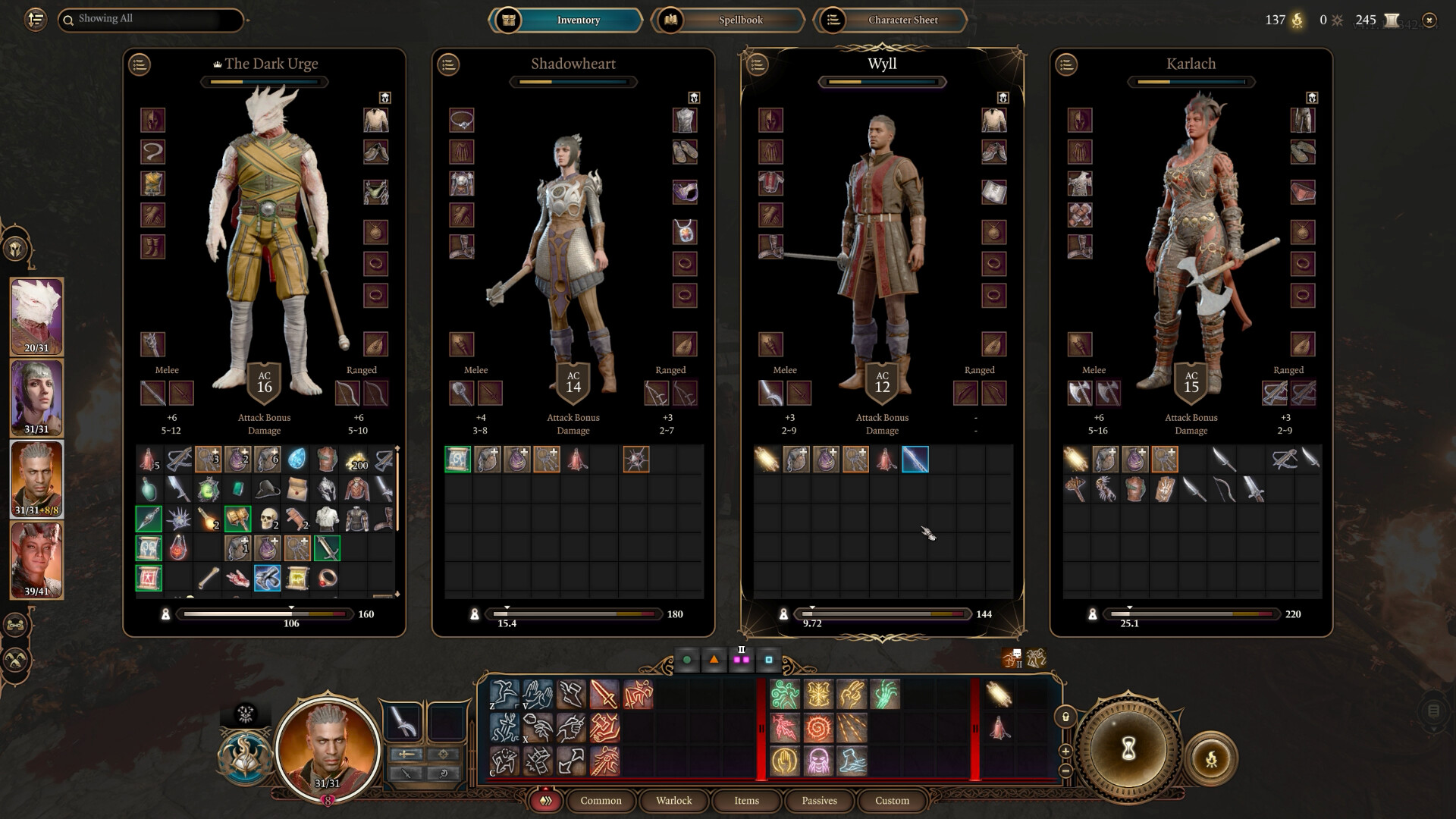
These explanations are editorial interpretation of the game’s documented roleplaying, exploration and turn-based systems. The official game sources are listed in our source register. All images are promotional material, not claims of our own gameplay tests.